Best Creatine Powder for Women (2026): 8 Powders Checked
Buy Naked Creatine: plain creatine monohydrate at $0.18 a day, on an NSF list that checks the tub holds what its label says. Women take the same 3 to 5 g a day as men. Of the 8 creatine powders we checked, 6 are on a public testing list.
Our pick for women

Buy Naked Creatine
5 g of plain creatine monohydrate a scoop, $0.18 a day in the 1 kg tub. NSF/ANSI 173 checks that the tub matches its label and that contaminants stay under set limits. It costs less a day than any tub on both NSF lists.
Buy on Amazon · $35.99- Want Thorne, Healthline’s top pick? Thorne Creatine is on both NSF lists, including the one that screens for drugs banned in sport. It costs $0.49 a day, 2.7 times our pick.
Which creatine powders for women are third-party tested? (6)
6 of the 8 powders we checked are on a public testing list. 5 of those are also screened for drugs banned in sport. Tap a badge to open the listing.
-
$0.18 a day
Buy on Amazon · $35.99 -
Healthline’s top pick
Thorne Creatine
NSF Certified for SportNSF/ANSI 173
Also screened for drugs banned in sport, lot by lot.
$0.49 a day
Buy on Amazon · $44.00 -
Lowest cost on a list
NOW Sports Creatine
Matched by name on Informed Sport, a program that tests each batch for drugs banned in sport before it is sold.
$0.16 a day
Buy on Amazon · $19.79 -
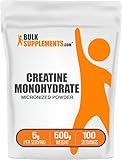
BulkSupplements Creatine
NSF Certified for SportNSF/ANSI 173
Both NSF lists, for a few cents more a day than our pick.
$0.20 a day
Buy on Amazon · $19.97 -
$0.48 a day
Buy on Amazon · $42.99 -
Transparent Labs Creatine HMB
NSF Certified for SportInformed ChoiceNSF/ANSI 173
Creatine plus HMB, so not plain creatine. You pay for the add-in.
$1.67 a day
Buy on Amazon · $49.99




Not on a testing list (2)
-
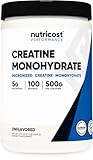
Nutricost Creatine
Not on a testing list
Healthline and Medical News Today list it as a budget pick. We did not find it on NSF, Informed Sport or Informed Choice.
$0.21 a day
Check price -
Nutricost Creapure Creatine Monohydrate
Not on a testing list
$0.38 a day
Check price

A day = one 5 g scoop. Costs are Amazon prices on November 6, 2026, divided by the servings in the tub. A badge counts only when the listing names the same product we price. NSF Certified for Sport lists lots one by one, so if you are drug-tested, match the lot number on your tub. Not being on a list is not a failed test. More on each program: third-party tested creatine.
Rather chew it? Force Factor creatine gummies are on NSF Certified for Sport, at $1.00 a day for 5 g. More in creatine gummies.
How much creatine should a woman take?
3 to 5 g of creatine monohydrate a day, the same as men. The International Society of Sports Nutrition gives that range and no separate figure for women (Kreider 2017). Take it every day, at any time. Loading (a bigger dose for the first week) is optional. To see the dose for your weight, use the creatine dose calculator.
Pregnant or breastfeeding? Ask your clinician first, because it has not been tested (see below). Taking it for bone? The one trial where it helped also had lifting (see below).
Do women need a creatine made for women?
No. A tub sold for women holds the same creatine monohydrate. What changes is the price and the extras added to it. The powders above are plain creatine monohydrate, apart from the one with HMB, and plain monohydrate is what the trials below used.
What has been tested in women
- Lifting Strength, in short trials Short trials found more strength and power. The two 2-year trials found no extra strength.
- Your cycle No need to time it Two small trials. Loading before a period held more water, with no change in body weight.
- Pregnancy and breastfeeding Not tested No published trial (PubMed search, Sep 28, 2026).
- Around menopause Barely tested One small 8-week trial of a low dose; no clear effect on symptoms.
- After menopause Bone shape, not density One small trial slowed bone loss at one spot; the two larger ones found no change in density.
Does creatine work for women who lift?
For strength in the short term, yes. Over years, the evidence is weaker. In 14 female college soccer players, creatine (15 g a day for a week, then 5 g a day for 12 weeks) raised bench press and squat strength more than placebo, but not lean tissue (NIH Office of Dietary Supplements). But in the largest trial in women, 237 women after menopause who trained for 2 years, creatine added no strength on bench press or hack squat (Chilibeck 2023).
The muscle-size effect is smaller in women. In a pooled analysis of 35 trials of people of all ages, men on creatine gained 1.46 kg of lean mass. Women gained 0.29 kg, too little to rule out chance (Delpino 2022). So expect strength gains more than visible muscle.
In older women, strength rises more clearly than size, and it takes training. In 60 frail older women, creatine with weight training beat every other group on bench press and on arm and leg lean mass. Creatine alone gained a little arm and leg lean mass, about as much as training alone, but no strength (Gualano 2014). More on training after 60: creatine for seniors.
Does creatine help bone after menopause?
It does not raise bone density. With weight training, it may help hip bone shape a little; the authors say the change is probably too small to prevent fractures.
| Trial | Women | Lifting? | What happened to bone |
|---|---|---|---|
| Chilibeck 2023 | 237, for 2 years | Yes, plus walking | Bone density did not change. Hip bone shape held up a little better, and an 80 m walk got faster. No extra strength on bench press or hack squat. More falls on creatine (30 vs 19), which could be chance. |
| Sales 2020 | 200 with low bone density, 3 g a day for 2 years | No | No change in bone, muscle, strength or falls. |
| Chilibeck 2015 | 47 started, 33 finished, 1 year | Yes | Bone density at the top of the thigh bone fell less: −1.2% on creatine, −3.9% on placebo. The thigh-bone shaft got wider, and bench press strength rose more (64% vs 34%). |
| Naddafha 2026 | Pooled analysis of 7 trials | Mixed | Bone density did not change. Small lean-mass and leg-press gains, only with 5 g or more plus training. |
Falls in the Chilibeck 2-year trial: from the start to 1 year after treatment ended (3 years in all), women on creatine reported 30 falls and women on placebo 19, a gap that could be chance (P = 0.24). There were 4 fractures in each group (Chilibeck 2023, full text).
The one trial that found less bone loss was small, and the larger two-year trial did not repeat it. Without training, bone did not change (Sales 2020). After menopause, if you lift, 5 g a day is a reasonable add-on. For bone, it helped only in a trial that included lifting.
Does creatine help with menopause symptoms?
There is almost no evidence. One trial gave 36 women in or near menopause low doses of creatine HCl for eight weeks. The 1,500 mg dose sped reaction time and raised brain creatine. This was a different form, not monohydrate. Mood swings leaned better, but not by enough to be sure (p = 0.06) (Korovljev 2026).
Is creatine safe in pregnancy or while breastfeeding?
No one knows, because no trial has been published. A PubMed search on September 28, 2026 found no trial of creatine supplements in pregnancy. A 2014 Cochrane review looking for trials of creatine to protect the baby’s brain found none either (Dickinson 2014). The question comes from animal work, where creatine given to the mother protected the baby’s brain from low oxygen (Muccini 2021). A 2025 expert review still lists pregnancy safety as an open question (Antonio 2025).
This page gives no dose for pregnancy or breastfeeding. The clinician managing your care decides.
Should you time creatine to your menstrual cycle?
No. Take it every day. Muscle stores build over weeks. Two small trials looked at the cycle. In one, 39 active women took part and 19 loaded 20 g a day for five days in each hormone phase. Sprint fatigue improved most in the phase when hormones are highest, but the authors say the overall effect could be chance (Gordon 2023). In the other, 30 women took part and 15 loaded creatine in the days before a period. Those on creatine gained about 0.8 L of body water and the placebo group lost about 0.6 L. Body weight did not change (Moore 2023).
Will creatine make me bloated or bulky?
Some water weight is likely at first. The NIH fact sheet says creatine with strength training can add 1 to 2 kg of body weight in a month, from water and possibly muscle (NIH Office of Dietary Supplements). Holding extra water is most common in the first several days (Antonio 2021). If you are prone to bloating, skip loading and take 3 to 5 g a day.
Bulk is unlikely. In the pooled trials, women’s lean-mass gain on creatine was too small to be sure of (above).
Hair loss: no study shows creatine causes it. The one trial that measured hair, in men, found no difference from placebo (where the worry came from).
Other questions: kidney blood tests, whether gummies hold their dose, creatine for men and the best creatine for anyone.
Questions
Does creatine help with cellulite?
No trial has tested it. A PubMed search for creatine and cellulite returned no studies on September 23, 2026.
Should I take creatine when training to lose weight?
Take it for strength, not fat loss. In 12 trials of adults under 50 who lifted, body fat percentage fell 1.19 points on creatine, but fat mass in kilograms did not change (Candow 2023). Track strength or a tape measure, not the scale.
Sources
- Testing lists: NSF/ANSI 173 (info.nsf.org), NSF Certified for Sport (nsfsport.com), Informed Sport and Informed Choice, searched by brand and product name. Each badge above links to its listing.
- NIH Office of Dietary Supplements. Dietary Supplements for Exercise and Athletic Performance: Fact Sheet for Health Professionals. Creatine section. ods.od.nih.gov
- Kreider RB, et al. International Society of Sports Nutrition position stand: safety and efficacy of creatine supplementation in exercise, sport, and medicine. J Int Soc Sports Nutr. 2017. The Council for Responsible Nutrition, a supplement trade group, paid to prepare it. PubMed
- Delpino FM, et al. Influence of age, sex, and type of exercise on the efficacy of creatine supplementation on lean body mass: A systematic review and meta-analysis of randomized clinical trials. Nutrition. 2022. PubMed
- Gualano B, et al. Creatine supplementation and resistance training in vulnerable older women: a randomized double-blind placebo-controlled clinical trial. Exp Gerontol. 2014. PubMed
- Chilibeck PD, et al. Effects of Creatine and Resistance Training on Bone Health in Postmenopausal Women. Med Sci Sports Exerc. 2015. PubMed
- Chilibeck PD, et al. A 2-yr Randomized Controlled Trial on Creatine Supplementation during Exercise for Postmenopausal Bone Health. Med Sci Sports Exerc. 2023. PubMed
- Sales LP, et al. Creatine Supplementation (3 g/d) and Bone Health in Older Women: A 2-Year, Randomized, Placebo-Controlled Trial. J Gerontol A Biol Sci Med Sci. 2020. PubMed
- Naddafha S, et al. Creatine monohydrate for lean mass, strength, and bone density in postmenopausal women: a systematic review and meta-analysis. J Int Soc Sports Nutr. 2026. PubMed
- Korovljev D, et al. The Effects of 8-Week Creatine Hydrochloride and Creatine Ethyl Ester Supplementation on Cognition, Clinical Outcomes, and Brain Creatine Levels in Perimenopausal and Menopausal Women (CONCRET-MENOPA): A Randomized Controlled Trial. J Am Nutr Assoc. 2026. PubMed
- Muccini AM, et al. Creatine Metabolism in Female Reproduction, Pregnancy and Newborn Health. Nutrients. 2021. PubMed
- Dickinson H, et al. Creatine for women in pregnancy for neuroprotection of the fetus. Cochrane Database Syst Rev. 2014. PubMed
- Antonio J, et al. Part II. Common questions and misconceptions about creatine supplementation: what does the scientific evidence really show? J Int Soc Sports Nutr. 2025. PubMed
- Gordon AN, et al. The Effects of Creatine Monohydrate Loading on Exercise Recovery in Active Women throughout the Menstrual Cycle. Nutrients. 2023. PubMed
- Antonio J, et al. Common questions and misconceptions about creatine supplementation: what does the scientific evidence really show? J Int Soc Sports Nutr. 2021. PubMed
- Candow DG, et al. Resistance Exercise and Creatine Supplementation on Fat Mass in Adults < 50 Years of Age: A Systematic Review and Meta-Analysis. Nutrients. 2023. PubMed
- Moore SR, et al. A Randomized Controlled Trial of Changes in Fluid Distribution across Menstrual Phases with Creatine Supplementation. Nutrients. 2023. PubMed
This page sums up published research. It is not medical advice.