Curcumin Absorption: Meriva vs Black Pepper vs BCM-95
Plain curcumin barely reaches your blood, even at 8,000 mg in one study, so the form on the label matters. Black pepper extract and forms like Meriva raised blood levels in small studies, and higher blood levels have not been shown to give a bigger benefit. Our pick: Youtheory Turmeric Extra Strength, $0.83 a day.
By Erin Rose Updated October 18, 2026 How we score
What to buy
Youtheory Turmeric Extra Strength gives 950 mg of curcuminoids a day, about what the joint trials used, with 10 mg of black pepper extract to help absorption. It is on USP Verified and NSF/ANSI 173.

Youtheory Turmeric Extra Strength
$0.83 a day · USP Verified
Curcumin forms compared
Each figure is from one human study that compared the form with plain curcumin. Read the catch before you compare numbers.
| Form | Blood levels | The catch |
|---|---|---|
| Plain curcumin (95% extract) | Very low: none found in the blood after single doses up to 8,000 mg | One 24-person dose study; joint trials still used plain extract. |
| Curcumin + black pepper extract | About 2,000% higher in one small 1998 study | One small 1998 study; piperine also slows how some drugs clear, in lab tests. |
| Meriva (curcumin phytosome) | About 29 times higher total curcuminoids in one study | Study authors included the maker; levels stayed below lab-effective amounts. |
| BCM-95 | About 6.9 times higher in a pilot crossover study | Small pilot study linked to the maker. |
| Water-dispersible curcumin | About 46 times higher in one study, at unequal doses | Given at 376 mg vs 1,800 mg of plain curcumin; sponsor-run lab. |
| Longvida and Theracurmin | No comparison with plain curcumin in the studies we read | Theracurmin was tested in 6 people at 150 to 210 mg; we found no Longvida comparison. |
The data behind this table is free to reuse: curcumin absorption dataset (JSON).
Longvida vs Meriva vs BCM-95
Meriva has the most to go on: a 29-fold rise in blood levels (Cuomo 2011) and joint studies at about 200 mg of curcumin a day (Belcaro 2010). BCM-95 had a 6.9-fold rise in a pilot study (Antony 2008) and one open-label joint trial at 500 mg three times a day (Shep 2019); one product that uses it is Terry Naturally CuraMed. For Longvida we found no study comparing it with plain curcumin that we could read. No two of the three have been tested against each other on pain.
Want Meriva, with no black pepper extract?
Thorne Curcumin Phytosome uses Meriva at about 200 mg of curcumin a day, the amount a Meriva study used (Belcaro 2010), and it is on NSF/ANSI 173 and NSF Certified for Sport. It suits people who take medicines.
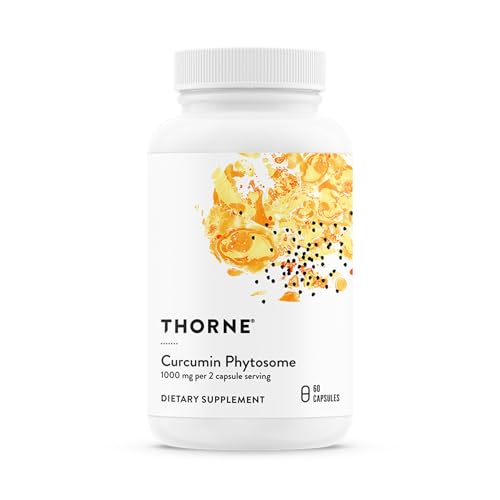
Thorne Curcumin Phytosome
$1.20 a day · NSF Certified for Sport
Does better absorption mean more benefit?
Not shown so far. No trial we found compared forms against each other on pain, and the Meriva study’s authors noted blood levels were still below those needed for most lab effects (Cuomo 2011). Absorption also has a safety side: in an Italian review, all 7 liver-injury cases involved high-dose, high-absorption products (Lombardi 2021), and NCCIH says high-absorption forms may harm the liver.
Black pepper extract and medicines
In lab studies, piperine blocks two systems that clear many drugs, P-glycoprotein and CYP3A4 (Bhardwaj 2002). That has not been tested as a drug interaction in people, but if you take medicines, choose a form without it and ask your pharmacist. More in who should ask a doctor first.
Questions people ask
What is the most absorbable form of curcumin?
No study we read tested all the forms side by side at the same dose, so there is no fair winner. In single studies, Meriva raised blood levels about 29 times and a water-dispersible form about 46 times over plain curcumin, but at very different doses and mostly in maker-run studies.
Is the “2,000%” black pepper figure real?
It comes from one small 1998 study: 20 mg of piperine with 2 g of curcumin raised blood levels about 2,000% (Shoba 1998). It was small, and it measured blood levels, not benefit.
Sources
- Lao CD, et al. “Dose escalation of a curcuminoid formulation.” BMC Complement Altern Med. 2006. PubMed 16545122
- Shoba G, et al. “Influence of piperine on the pharmacokinetics of curcumin in animals and human volunteers.” Planta Med. 1998. PubMed 9619120
- Cuomo J, et al. “Comparative absorption of a standardized curcuminoid mixture and its lecithin formulation.” J Nat Prod. 2011. PubMed 21413691
- Antony B, et al. “A Pilot Cross-Over Study to Evaluate Human Oral Bioavailability of BCM-95CG (Biocurcumax), A Novel Bioenhanced Preparation of Curcumin.” Indian J Pharm Sci. 2008. PubMed 20046768
- Jäger R, et al. “Comparative absorption of curcumin formulations.” Nutr J. 2014. PubMed 24461029
- Belcaro G, et al. “Product-evaluation registry of Meriva, a curcumin-phosphatidylcholine complex, for the complementary management of osteoarthritis.” Panminerva Med. 2010. PubMed 20657536
- Shep D, et al. “Safety and efficacy of curcumin versus diclofenac in knee osteoarthritis: a randomized open-label parallel-arm study.” Trials. 2019. PubMed 30975196
- Kuptniratsaikul V, et al. “Efficacy and safety of Curcuma domestica extracts compared with ibuprofen in patients with knee osteoarthritis: a multicenter study.” Clin Interv Aging. 2014. PubMed 24672232
- Bhardwaj RK, et al. “Piperine, a major constituent of black pepper, inhibits human P-glycoprotein and CYP3A4.” J Pharmacol Exp Ther. 2002. PubMed 12130727
- Lombardi N, et al. “Acute liver injury following turmeric use in Tuscany: An analysis of the Italian Phytovigilance database and systematic review of case reports.” Br J Clin Pharmacol. 2021. PubMed 32656820
- National Center for Complementary and Integrative Health. “Turmeric.” nccih.nih.gov