Types of Magnesium: All 8 Forms Compared — Which Is Best? (2026)
Not medical advice — this summarizes published research; talk to a clinician before starting a supplement. Methodology.
Quick answer
Magnesium glycinate is the right default for most people — it is among the best-absorbed forms and the gentlest on the stomach. Take citrate if the goal is constipation, L-threonate for cognition, and treat oxide as an antacid rather than a supplement: only about 4% of it is absorbed.
5 of the 13 magnesium products we checked direct you past the NIH's 350 mg supplemental ceiling when you follow the label's own maximum servings. That is the part every other comparison skips: the milligrams on the front of the bottle are usually compound weight, not the elemental magnesium your body uses, and the servings the label permits are what set your real daily intake. We checked each product against the label its manufacturer filed with the NIH. See which ones stay under it →
The product link below is an affiliate link — we may earn a commission, and it never changes the pick. How we choose.
On this page
Some links here go to Amazon and we may earn a commission if you buy. It never changes which product we pick or what we say about it — picks are ranked by cost per effective dose, third-party certification, and whether the label agrees with the safety ceiling. How we choose.
Best Magnesium by Goal
Which magnesium should you take?
- Sleep & anxiety Glycinate
Best absorbed and gentlest; glycine adds a calming effect.
- Constipation Citrate
The mild osmotic pull is the point here; well absorbed and cheap.
- Brain & memory L-Threonate
The one form shown to raise brain magnesium — but mostly in rat studies so far.
- Cheapest that still absorbs Citrate
Good absorption at low cost — skip oxide for repletion.
- Antacid / occasional laxative Oxide
Only ~4% absorbed — fine for this, poor for correcting a deficiency.
- Heart & blood pressure Taurate
Paired with taurine for vascular support — a theory, with no human trials yet.
No product tracked for this form yet — we don't link one we haven't checked.
- Energy & muscle Malate
Malic acid is part of the energy cycle — a mechanism, not proven for energy in trials.
No product tracked for this form yet — we don't link one we haven't checked.
- Baths & topical Sulfate (Epsom) & Chloride
Soak and topical use, not oral repletion.
No product tracked for this form yet — we don't link one we haven't checked.


Prices are cost per effective daily dose, verified 2026-08-01. Where we track no product for a form, we say so rather than substituting one.
All 8 Magnesium Forms at a Glance
| Form | Bioavailability | Best For | Side Effects | Cost Tier |
|---|---|---|---|---|
| Magnesium Glycinate (Bisglycinate) | High | Sleep, anxiety, general supplementation | Minimal — gentlest on stomach | Moderate–High |
| Magnesium Citrate | Moderate–High | Constipation, general supplementation | Osmotic laxative effect at higher doses | Low–Moderate |
| Magnesium L-Threonate (Magtein) | Moderate | Cognitive function, memory | Mild — headache, drowsiness reported | High |
| Magnesium Taurate | Moderate–High | Cardiovascular health, blood pressure | Minimal | Moderate–High |
| Magnesium Malate | Moderate–High | Energy production, general supplementation | Mild — occasional digestive discomfort | Moderate |
| Magnesium Chloride | Moderate | Topical use, general supplementation | Digestive upset at higher oral doses | Low |
| Magnesium Oxide | Very Low (~4%) | Heartburn/antacid, acute constipation (Milk of Magnesia) | Strong laxative effect, poor absorption | Very Low |
| Magnesium Sulfate (Epsom Salt) | Low (oral), debated (topical) | Bath soaks, acute IV use in hospitals | Strong laxative when taken orally | Very Low |
Why the Label Percentage Misleads You
The "elemental magnesium" percentage on a label is not how much you absorb, and reading it as though it were is the most expensive mistake in this category. Oxide is 60% elemental magnesium by weight and only about 4% absorbed; glycinate is ~14% elemental and absorbed far better. The magnesium is identical in every form — what changes is the carrier it's bound to, which drives both how much gets in (chelated and organic carriers beat inorganic salts) and what else it does (glycine calms, citrate loosens, taurine is studied for the heart). So we rank by cost per absorbed, clinically-effective dose, never by milligrams on the label.
If glycinate isn't for you, citrate absorbs just as well: NOW Magnesium Citrate 200 mg (250 Tablets) $0.16/day at its label serving. Note that serving is 400 mg — see how that compares to the 350 mg ceiling.
| Item | Value |
|---|---|
| BulkSupplements.com | $0.18 |
| The Vitamin Shoppe | $0.23 |
| Nature Made | $0.36 |
| Doctor's Best | $0.46 |
| KAL | $0.55 |
| Thorne | $0.87 |
If that chart makes you want the certified one rather than the cheapest one, it is Nature Made Magnesium Glycinate 200mg $0.36/day — USP Verified, at 200 mg elemental per serving. Certification tells you the label is accurate; it does not make the magnesium work better.
| Item | Value (%) |
|---|---|
| Oxide | ~60% |
| Citrate | ~16% |
| Malate | ~15% |
| Glycinate | ~14% |
| Chloride | ~12% |
| Sulfate | ~10% |
| Taurate | ~9% |
| L-Threonate | ~7% |
L-Threonate sits at the bottom of that chart for a reason opposite to oxide's: its ~7% elemental read looks low, but it's the one form shown to raise brain magnesium, dosed by its Magtein content, not its elemental percentage. The studied dose is 2,000 mg Magtein (144 mg elemental) — Life Extension Neuro-Mag Magnesium L-Threonate (90 Capsules) $1.02/day hits that exactly.
What the shelf actually sells, and at what dose
The argument above is about absorption. This is about what you can actually buy, which turns out to explain why the badly absorbed form keeps winning.
We read 833 magnesium labels filed with the NIH Dietary Supplement Label Database — out of 39,884 it lists on the market, across 276 brands — and took the declared dose and the named form off each Supplement Facts panel.
| Form | Labels | Median dose | 90th percentile |
|---|---|---|---|
| Citrate | 376 | 250 mg | 500 mg |
| Oxide | 145 | 300 mg | 500 mg |
| Glycinate | 102 | 232.5 mg | 400 mg |
| Malate | 40 | 355 mg | 480 mg |
| Aspartate | 27 | 133 mg | 400 mg |
The dose runs backwards to the absorption. Oxide — the form that is roughly 4% absorbed — carries the highest median dose on the shelf at 300 mg. Glycinate, the form this page recommends, carries the lowest at 232.5 mg. That is not a coincidence and it is not manufacturers being generous: a poorly absorbed salt is cheap and dense, so you can put a big number on the front of the bottle without raising the cost of making it. The big number is the product.
Which is why the shelf is shaped the way it is. Citrate is the most common form at 376 labels, and oxide is close behind at 145. Glycinate — the one most often recommended for sleep and for people who cannot tolerate the laxative effect — appears on just 102. If it feels hard to find a glycinate product at a sensible price, that is because roughly five labels carry citrate or oxide for every one that carries glycinate.
Read the two columns together before you compare prices. A 400 mg oxide tablet and a 200 mg glycinate capsule are not two doses of the same thing, and the cheaper number per milligram is attached to the form that delivers least of it.
Method: 833 magnesium labels retrieved from the NIH Dietary Supplement Label Database (DSLD) v9 on 2026-08-29; 825 carried a parseable elemental dose and 779 also directed a daily amount, across 276 brands. Forms are read from the declared ingredient, so a label naming two magnesium salts is counted under each. What it cannot tell you: how many bottles of each form are sold. This counts labels on the market, not purchases, so it describes what is on offer rather than what people choose.
Detailed Breakdown by Form
Magnesium Glycinate (Bisglycinate)
Bioavailability: High · Elemental Mg: ~14% · Best for: Sleep, anxiety, general supplementation · Cost: Moderate–High
Chelated with glycine (calming amino acid). Preferred for sleep due to dual mechanism.
Magnesium Citrate
Bioavailability: Moderate–High · Elemental Mg: ~16% · Best for: Constipation, general supplementation · Cost: Low–Moderate
Good absorption at lower cost. Laxative effect is a feature for constipation, side effect otherwise.
Magnesium L-Threonate (Magtein)
Bioavailability: Moderate · Elemental Mg: ~7% · Best for: Cognitive function, memory · Cost: High
Only form shown to cross the blood-brain barrier and increase brain magnesium (PMID: 20152124). Human clinical data is preliminary but promising; the animal evidence remains the strongest support. Only ~7% elemental Mg — too low to serve as a general magnesium supplement.
Magnesium Taurate
Bioavailability: Moderate–High · Elemental Mg: ~9% · Best for: Cardiovascular health, blood pressure · Cost: Moderate–High
Chelated with taurine (cardiovascular amino acid). Strong mechanistic rationale for synergistic vascular protection (PMID: 8692051), but limited human clinical trial data. Animal studies confirm antihypertensive and cardioprotective effects.
Magnesium Malate
Bioavailability: Moderate–High · Elemental Mg: ~15% · Best for: Energy production, general supplementation · Cost: Moderate
Chelated with malic acid (involved in ATP energy cycle). Often marketed for fibromyalgia, but a systematic review found it "makes little or no difference on pain" (PMID: 31150373). Reasonable choice for general supplementation.
Magnesium Chloride
Bioavailability: Moderate · Elemental Mg: ~12% · Best for: Topical use, general supplementation · Cost: Low
Available as oral supplement and topical oil/spray. Topical absorption is debated in the literature.
Magnesium Oxide
Bioavailability: Very Low (~4%) · Elemental Mg: ~60% · Best for: Heartburn/antacid, acute constipation (Milk of Magnesia) · Cost: Very Low
Cheapest form but least absorbed. Not recommended for magnesium deficiency correction. Contains highest % elemental Mg by weight (60%) — but that does not translate to absorbed magnesium.
Magnesium Sulfate (Epsom Salt)
Bioavailability: Low (oral), debated (topical) · Elemental Mg: ~10% · Best for: Bath soaks, acute IV use in hospitals · Cost: Very Low
Primarily used as bath soak (Epsom salt). Oral use causes significant GI effects. IV magnesium sulfate is used medically for preeclampsia and acute asthma.
Read through all eight and still want the one we'd buy? Vitamin Shoppe Magnesium Glycinate 400mg $0.23/day — the lowest cost per absorbed dose among the glycinates we checked.
Does the Label Agree With the Safety Ceiling?
Usually not. We pulled every magnesium product in our catalog from NIH's Dietary Supplement Label Database — the labels manufacturers actually file with the government — and multiplied each declared dose by the maximum daily servings the label itself permits. Nobody else in this category runs that check, so here it is.
Label audit · NIH Dietary Supplement Label Database
5 of 13 labels direct you above the 350 mg ceiling when followed exactly as written.
None of these are rogue products and none of this is a safety scandal — 400 mg is common, widely tolerated, and the usual consequence of overshooting is loose stools, not harm. The point is narrower and more useful: the label is not your dose guide. Follow the directions on five of these bottles and you are over the NIH supplemental ceiling every day without ever being told.
Over the ceiling at the label's own maximum
-
129%of UL
BulkSupplements Magnesium Glycinate Powder
225 mg × 2 servings = 450 mg/day
Check price on Amazon → -
114%of UL
Vitamin Shoppe Magnesium Glycinate 400mg
400 mg × 1 serving = 400 mg/day
Check price on Amazon → -
114%of UL
Doctor's Best High Absorption Magnesium
200 mg × 2 servings = 400 mg/day
Check price on Amazon → -
114%of UL
KAL Magnesium Glycinate 400
400 mg × 1 serving = 400 mg/day
Check price on Amazon → -
114%of UL
NOW Magnesium Citrate 200 mg (250 Tablets)
400 mg × 1 serving = 400 mg/day
Check price on Amazon →


Label and ceiling agree
If you would rather not do arithmetic at the kitchen counter, buy a bottle whose single serving already lands under the ceiling. Then a second serving is a decision you make, not a default you inherit.
-
93%of UL
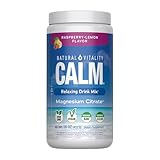
Natural Vitality Calm Magnesium Citrate Powder (16 oz)
325 mg × 1 serving = 325 mg/day
Check price on Amazon → -
71%of UL
Nature Made Magnesium Citrate 250 mg (120 Softgels)
250 mg × 1 serving = 250 mg/day
Check price on Amazon → -
71%of UL
Nature Made Magnesium Oxide 250 mg (200 Tablets)
250 mg × 1 serving = 250 mg/day
Check price on Amazon → -
57%of UL
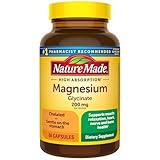
Nature Made Magnesium Glycinate 200mg
200 mg × 1 serving = 200 mg/day
Check price on Amazon → -
57%of UL
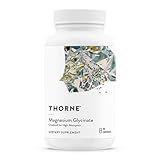
Thorne Magnesium Bisglycinate
200 mg × 1 serving = 200 mg/day
Check price on Amazon → -
41%of UL
Life Extension Neuro-Mag Magnesium L-Threonate (90 Capsules)
144 mg × 1 serving = 144 mg/day
Check price on Amazon → -
41%of UL
NOW Magtein Magnesium L-Threonate (90 Veg Capsules)
144 mg × 1 serving = 144 mg/day
Check price on Amazon →




How we checked. NIH ODS: 350 mg/day supplemental magnesium (excludes food). We matched 11 of 13 products to a label filed with NIH's DSLD by brand and declared dose, found 1 matching a label the manufacturer has since withdrawn, and could not find a label record for 1. Where a match is weaker than exact we label it in the card rather than dropping the product. Labels retrieved 2026-08-11. Product images via the Amazon Associates API.
Verification record
How this was checked, and what it can't tell you
- Primary source
- NIH Dietary Supplement Label Database, v9 — the labels manufacturers file with the US government. Public domain.
- Retrieved
- , directly from the DSLD API
- Products checked
- 13 in scope · 11 matched exactly · 1 matched a withdrawn label · 1 no label record found
- Match rule
- accepted only when the label's declared elemental dose equals the catalog dose within 2%, and the brand string agrees. Weaker matches are published with their weaker status rather than silently upgraded.
- Human or machine
- Every figure is read from a filed label or computed from it — none is estimated, inferred, or produced by a language model, and the DSLD record id is printed beside each product so any number can be traced to its source. The surrounding writing is drafted and edited by a human with AI assistance; the figures it describes are not.
- Check it yourself
- The full reconciliation is published as an open dataset — /api/v1/label-verification.json (CC BY 4.0). Every row carries its DSLD id and a link to the filed label, so our arithmetic can be re-run against the same public source.
What this method cannot establish
- A filed label is not a chemical assay. This shows what the manufacturer declared, not what independent testing of the capsule would find.
- DSLD labels carry an entry date and can lag the product currently on the shelf. We print the vintage of every label and flag any the manufacturer has withdrawn.
- Exceeding the upper intake level is not the same as toxicity. For supplemental magnesium the usual consequence is gastrointestinal, not harm.
- The 350 mg ceiling applies to supplemental magnesium only. It excludes magnesium from food, which has no upper limit.
- This is a data reconciliation, not medical advice, and it has not been reviewed by a licensed clinician.
Which Magnesium Is the Best Value?
"Best value" isn't the cheapest bottle — it's the lowest cost per dose your body actually absorbs and can use. On that measure:
- Best value overall — magnesium citrate. Priced at an equal 350 mg elemental dose — the supplemental ceiling, so nothing here is costed at a dose we'd tell you not to take — the cheapest citrate in our catalog works out to $0.14/day against $0.20 for the cheapest glycinate. Both are well absorbed, so the gap is small — choose on tolerance, not price.
- Best if you want gentleness — magnesium glycinate. The best-absorbed and easiest on the stomach, and it doubles for sleep and anxiety. Normalised to the same elemental dose it is not the pricier option people assume — our cheapest glycinate runs $0.20/day against $0.14 for the cheapest citrate. The pick at the top of this page is not the cheapest one, though: it is the cheapest whose label keeps a single serving under the ceiling.
- The false economy — magnesium oxide. Cheapest per bottle, but at ~4% absorption most of it passes through unused, so it's actually the worst value for raising your levels despite looking cheapest.
The honest short answer: at an equal elemental dose these two cost about the same, so choose on how your gut reacts — glycinate is the gentlest, citrate is the one that loosens stools. Skip oxide unless you specifically want an antacid or a laxative.
And if you do specifically want oxide for antacid or occasional-laxative use: Nature Made Magnesium Oxide 250 mg (200 Tablets) is $7.99 for a 200-day supply — just don't buy it expecting to raise your magnesium levels.
Other, Less Common Forms
Beyond the main eight, a few more forms turn up on labels:
- Magnesium orotate — bound to orotic acid and popular in European and sports circles for heart and performance, but human evidence is thin and it's expensive.
- Magnesium lactate — moderately absorbed and gentle on the stomach; used in some supplements and food fortification.
- Magnesium aspartate — an older amino-acid form with decent absorption, usually seen in combination products.
- Magnesium carbonate — converts to magnesium chloride in stomach acid and works mainly as an antacid; absorption is on the low side, like oxide.
Go Deeper by Goal
The picker at the top gives the quick answer. For the full evidence and product picks on the most common goals:
- Best magnesium for sleep — glycinate, 6 products compared by evidence and cost
- Best magnesium for anxiety — the RCT evidence and what actually helps
- Glycinate vs citrate — the two most-recommended forms, head to head
- How much to take — dosing, timing, and elemental vs compound weight
- How long magnesium takes to work — what the sleep, anxiety, and cramp trials actually timed
- Best time to take magnesium — morning vs night, with food, and what to space it away from
- Taking magnesium with vitamin D — why the two work better together
- Signs of magnesium deficiency — who's most at risk and how it's tested
Top Product Picks by Form
Based on our product comparison research, here are the best-value options for the most popular forms:
| Use Case | Product | Cost/Day | Buy |
|---|---|---|---|
| Budget Pick | BulkSupplements Magnesium Glycinate Powder | $0.18 | Buy on Amazon |
| Best Value (Capsule) | Vitamin Shoppe Magnesium Glycinate 400mg | $0.23 | Buy on Amazon |
| Quality Verified (USP) | Nature Made Magnesium Glycinate 200mg | $0.36 | Buy on Amazon |
Safety and Drug Interactions
Regardless of form, magnesium supplements share the same core safety considerations:
- Kidney disease: Magnesium is cleared by the kidneys. Consult your doctor before supplementing if you have impaired kidney function (eGFR below 60).
- Antibiotics: Magnesium binds to tetracyclines and quinolone antibiotics, reducing their absorption. Separate by 2+ hours.
- Bisphosphonates: Magnesium reduces absorption of osteoporosis drugs like alendronate. Separate by 2+ hours.
- Diuretics: Loop diuretics deplete magnesium; potassium-sparing diuretics reduce magnesium excretion. Both affect supplementation needs.
- PPIs: Long-term proton pump inhibitor use can cause magnesium deficiency (FDA safety alert).
- Upper limit: 350mg/day supplemental (NIH). Dietary magnesium has no upper limit. Exceeding this primarily causes diarrhea — glycinate is least likely to cause this.
If you take prescription medications, consult your pharmacist before starting magnesium.
Since glycinate causes the fewest GI side effects of any form, it's the safer default if you're sensitive to magnesium's laxative pull: Vitamin Shoppe Magnesium Glycinate 400mg $0.23/day.
Frequently Asked Questions
What is the most absorbable form of magnesium?
Magnesium glycinate and magnesium citrate are the most absorbable common forms. A systematic review of magnesium bioavailability found organic forms are generally better absorbed than inorganic ones like oxide (PMID: 34111673), and magnesium oxide has very low absorption — around 4% (PMID: 11794633).
What type of magnesium is best for sleep?
Magnesium glycinate. High bioavailability, plus the glycine it's bound to has its own calming effect (studied mostly as glycine alone). A small pooled analysis of older adults with insomnia found magnesium cut the time to fall asleep by about 17 minutes, though it did not significantly change total sleep time (PMID: 33865376). Dose: 320-400mg elemental Mg/day. See our full sleep comparison, or how long magnesium takes to work for how that 17-minute figure compares to the timelines for anxiety and cramps.
What type of magnesium is best for anxiety?
Magnesium glycinate is generally recommended due to high bioavailability and glycine's role as an inhibitory neurotransmitter. Magnesium L-threonate is a newer option with emerging evidence for cognitive and neurological effects, though human data is still limited.
Is magnesium oxide a waste of money?
For targeted supplementation (sleep, anxiety, deficiency correction), yes — the very low absorption means most of it passes through unused. However, oxide is effective as an antacid and for acute constipation. It also contains the highest % elemental magnesium by weight (60%), so it's the cheapest way to get magnesium into your GI tract — just not into your bloodstream.
Related Comparisons
- Magnesium Glycinate vs Citrate — Detailed head-to-head comparison
- Best Magnesium for Sleep — 6 products compared by evidence and cost
- Best Magnesium for Anxiety — Glycinate recommended; RCT evidence for GAD-7 improvement
- Magnesium for Muscle Cramps — Honest Cochrane review assessment
- Dosage Guide — How much, when, and elemental vs compound weight
- Deficiency Signs — ~50% of Americans don't meet the RDA
- All Magnesium Guides
Sources
- Firoz M, Graber M. "Bioavailability of US commercial magnesium preparations." Magnes Res. 2001;14(4):257-62. PMID: 11794633
- Mah J, Pitre T. "Oral magnesium supplementation for insomnia in older adults: a Systematic Review & Meta-Analysis." BMC Complement Med Ther. 2021;21(1):125. PMID: 33865376
- Bannai M, Kawai N. "New therapeutic strategy for amino acid medicine: glycine improves the quality of sleep." J Pharmacol Sci. 2012;118(2):145-148. PMID: 22293292
- Pardo MR, et al. "Bioavailability of magnesium food supplements: A systematic review." Nutrition. 2021;89:111294. PMID: 34111673
- Slutsky I, et al. "Enhancement of learning and memory by elevating brain magnesium." Neuron. 2010;65(2):165-177. PMID: 20152124
- Ferreira I, et al. "Magnesium for fibromyalgia." Medwave. 2019;19(6):e7670. PMID: 31150373
- McCarty MF. "Complementary vascular-protective actions of magnesium and taurine." Med Hypotheses. 1996;46(2):89-100. PMID: 8692051
- NIH Office of Dietary Supplements. "Magnesium: Fact Sheet for Health Professionals." ods.od.nih.gov